PE vs. PVC Artificial Christmas Trees: The Ultimate Guide
As a direct-source manufacturer of premium artificial botanicals and holiday decor with years of experience, the question we are asked most frequently at Twinkletree—especially by customers upgrading to a high-end tree for the first time—is: “What exactly is the difference between PE and PVC Christmas trees, and how do I make the smartest investment for my home?”
We have all seen those disappointing, cheap fake trees: flat, paper-like branches, harsh artificial shine, and brittle plastic needles that shed all over the floor during assembly. In this in-depth guide, we will break down these two core materials from a manufacturer’s perspective, helping you understand the underlying factors that determine a tree’s texture, realism, and lifespan.
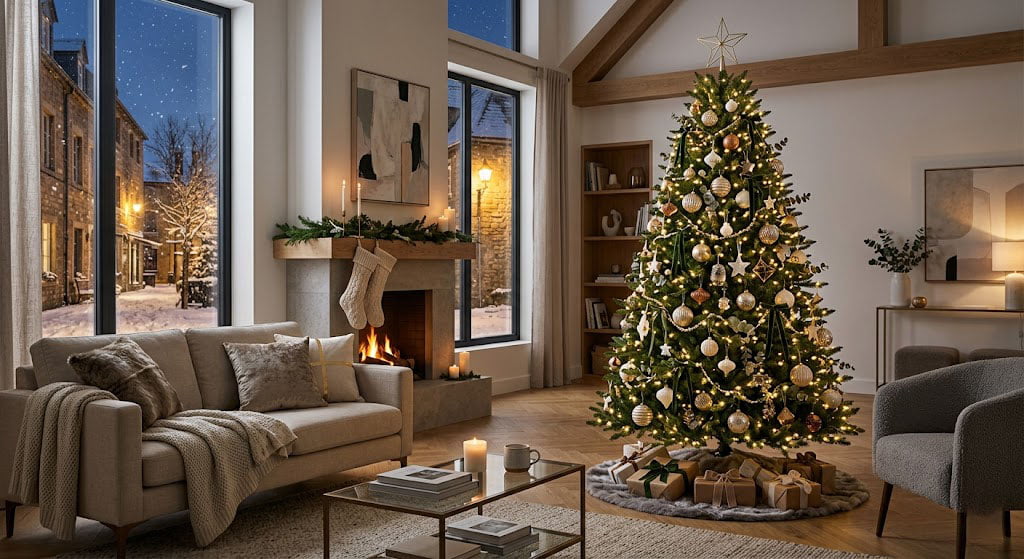
What is a PVC Christmas Tree? (The Traditional & Budget-Friendly Choice)
If you have purchased a faux tree at any point in the last two or three decades, it was highly likely made of 100% PVC (Polyvinyl Chloride). For families with a strict budget or those needing only short-term festive decor, traditional pvc artificial christmas trees remain the most common entry-level option on the market. Their manufacturing process is relatively straightforward: sheets of coloured plastic film are pressed flat, cut into thin, fringe-like strips, and then tightly twisted between two wire strands to form a “branch.”
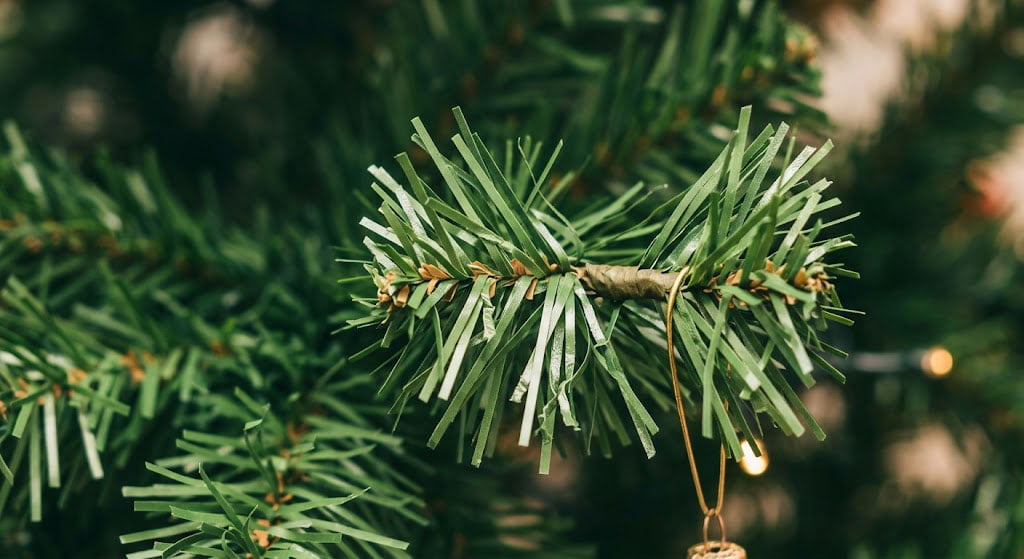
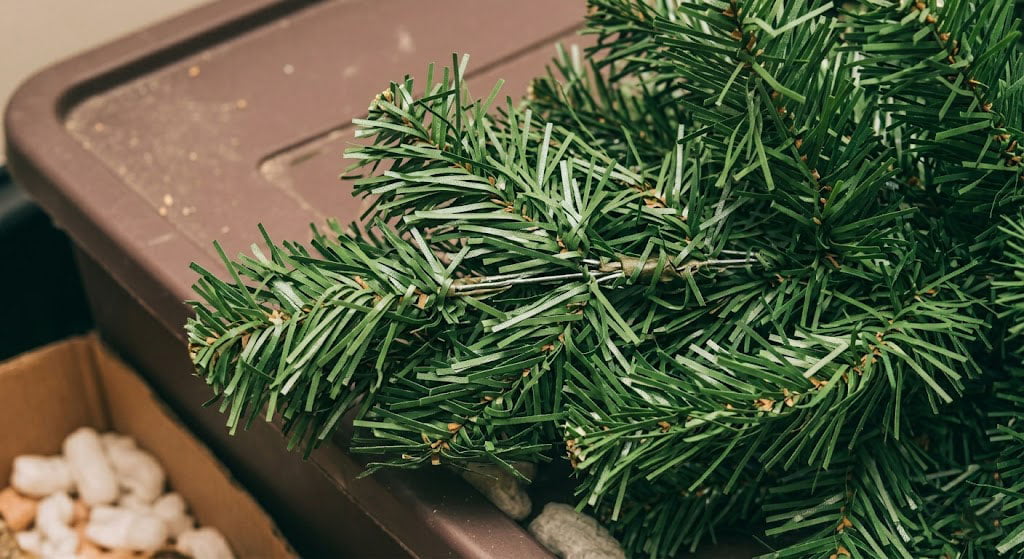
The Real-World Experience & Pain Points: We have seen many families and small boutiques purchase extremely cheap, pure PVC trees to save on upfront costs. They might look acceptable the first year when heavily disguised with baubles and lights. However, after spending a year compressed in a storage box under the stairs or in the loft, the flat needles often become severely distorted, lifeless, and lose their original colour saturation by the second festive season.
- Pros: Highly attractive price point; a wide variety of colours available; lightweight material allows for a very dense appearance; typically features basic fire-retardant properties.
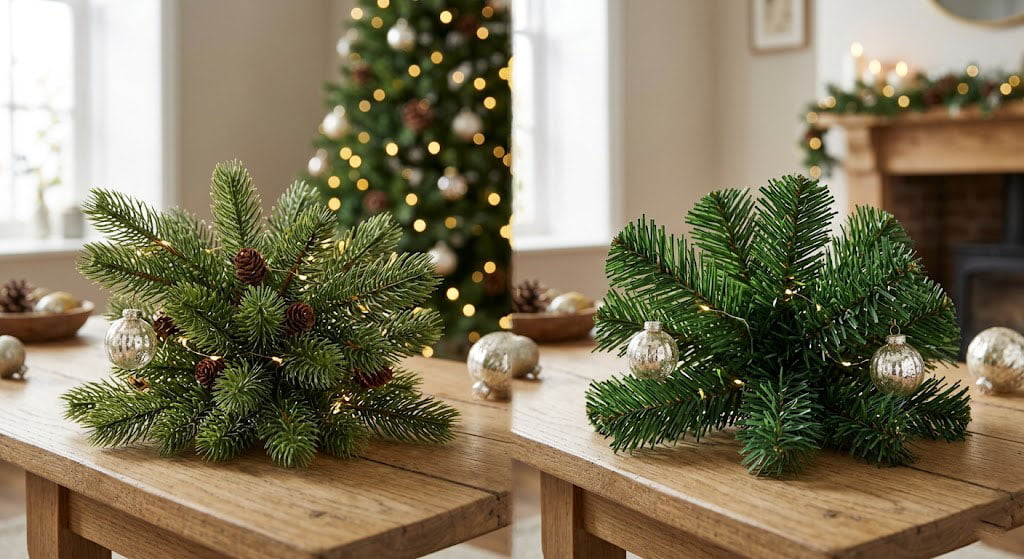
- Cons: Feels and looks stiff with a distinct “plastic sheet” appearance and unnatural glare; easily identifiable as a fake tree up close; extremely poor crush resistance—once flattened during storage, PVC needles rarely recover their original shape.
What is a PE Christmas Tree? (The Revolutionary, Ultra-Realistic Craftsmanship)
Frankly, for any family seeking to create a sophisticated, high-quality festive atmosphere in their home, the biggest concern is that a fake tree will look, well, fake. If you have been searching online for the most real looking artificial christmas tree, then products featuring 100% PE (Polyethylene) or a high percentage of PE are your ultimate answer. PE material abandons the traditional flat-cutting process in favour of an expensive and precise 3D Injection Moulding technology.
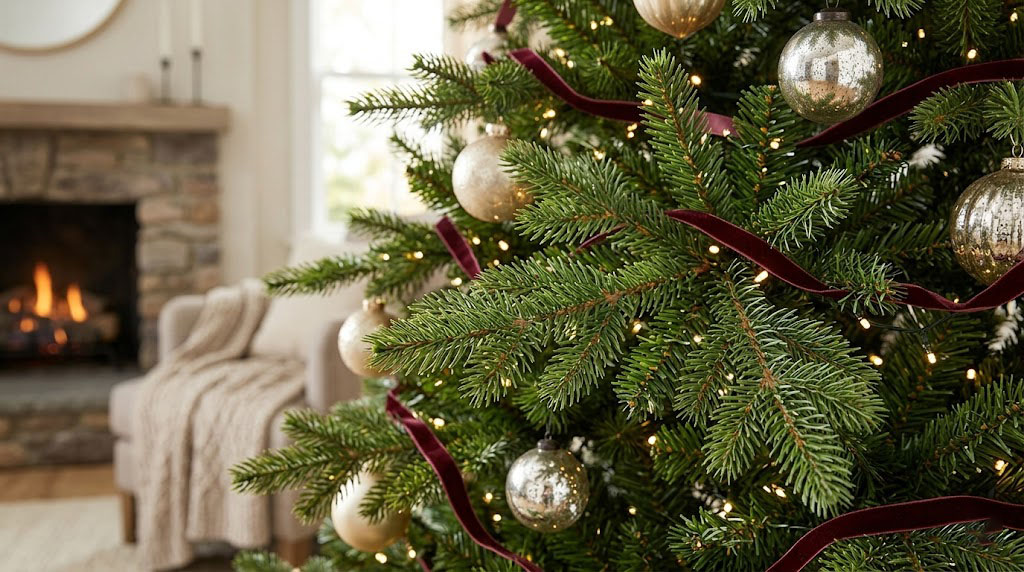
The Real-World Experience & Pain Points Solved: Take Twinkletree’s highly sought-after noble fir artificial christmas tree collection as an example. Its branches possess a natural, rounded thickness and a fleshy, botanical feel. The colour is never a flat, solid green; it features the subtle gradients and matte finish found in nature. Even when guests stand mere centimetres away or touch the branches, they will struggle to tell it apart from a real, forest-cut tree.
- Pros: The industry’s highest level of realism (3D true-to-life needles); incredible crush resistance and bounce-back memory; eco-friendly and odourless; exceptionally long lifespan with zero shedding.
- Cons: Due to the complex moulding and injection process, the initial investment is noticeably higher than PVC.
Core Comparison: Material Differences at a Glance
| Material | Visual & Tactile Effect | Core Pros & Cons | Expected Lifespan |
|---|---|---|---|
| PE (Polyethylene) | Ultra-realistic, thick botanical feel, natural colour gradients, and premium matte finish. | ✓ Closest to nature, crush-resistant. ✕ Higher production costs. |
10–15+ Years |
| PVC (Polyvinyl Chloride) | Bright, uniform colour, diverse shapes, slight plastic feel and glare. | ✓ Budget-friendly, lightweight. ✕ Flattens easily, lacks realism up close. |
3–5 Years |
The Industry Secret: Blended Trees (PE & PVC) – The Smartest Balance
After understanding these two materials, you might feel torn. The best-selling and smartest solution on the market today is to choose a PE/PVC Blended Christmas Tree. At Twinkletree, we place the incredibly realistic 3D PE branches on the outer perimeter of the tree, while utilising high-density PVC branches for the inner core near the central pole. This provides exceptional block-out coverage and a wonderfully lush silhouette, keeping the price tag within a comfortable range.
Return on Investment: Why Premium Materials Save You Money
Let’s do the maths. A cheap, pure PVC tree might only cost you fifty or sixty Euros today, but by its third year, it will likely be sparse, faded, and ready for the bin. In contrast, a premium tree with a high PE percentage is a true investment. It will flawlessly accompany your family through 10 to 15 festive seasons. You receive a magazine-cover-worthy display year after year—without ever having to hoover up dropped pine needles.
Conclusion
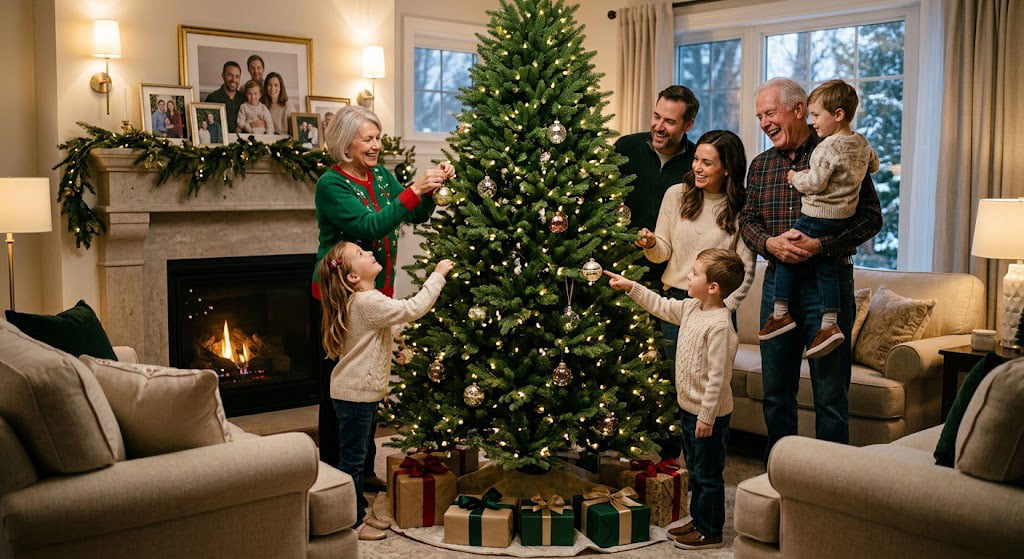
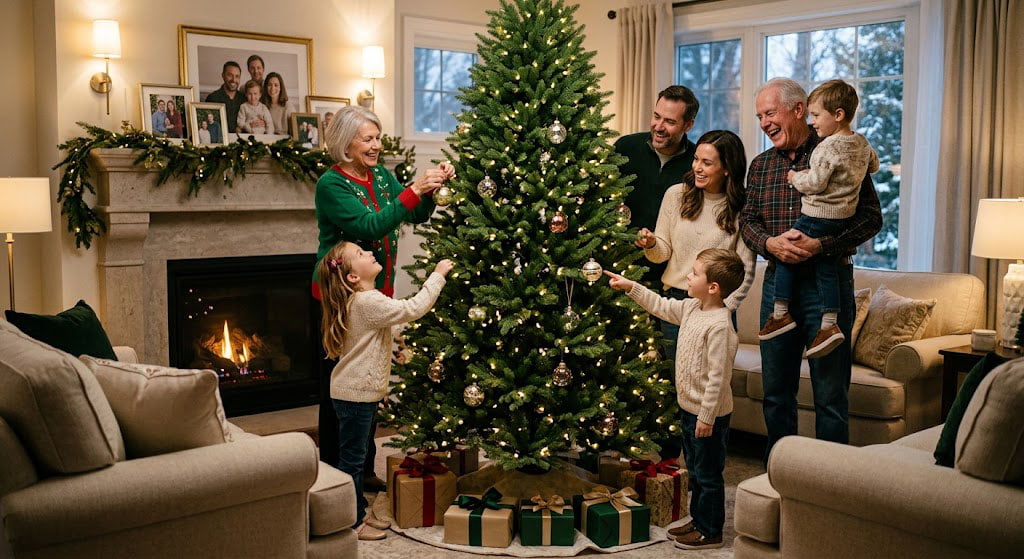
If you are looking for a “forever tree” that holds family memories, withstands close-up admiration, and perfectly complements a sophisticated European interior, do not hesitate to choose a high-PE percentage tree or a premium PE/PVC blend. Stop wasting your holiday budget on disposable fake trees—invest in a masterpiece that truly stands the test of time.
Frequently Asked Questions (FAQs)
1. Do PE Christmas trees have a strong plastic smell?
Not at all. High-quality PE material is exceptionally stable, eco-friendly, and completely odourless, making it incredibly safe for households with newborns or scent-sensitive pets.
2. What percentage of PE makes a blended tree “premium”?
For homes demanding a high-end look, we recommend selecting a style with at least 60% to 70% PE. This ratio guarantees that the entire visible exterior is flawlessly realistic.
3. If PE branches get crushed in the box, will they actually recover?
Absolutely. PE material boasts incredible “memory” and elasticity. You simply need to spend a little time fluffing the branches, and they will quickly spring back to their full, multidimensional factory shape.

About the Manufacturer
TwinkleTree is a professional manufacturer of premium artificial Christmas trees, dedicated exclusively to the global B2B market. With over 15 years of expertise in hyper-realistic PE foliage technology and commercial-grade lighting systems, we provide factory-direct ODM/OEM solutions for major retailers, hotels, and commercial projects worldwide.
Contact Factory TeamLooking for Commercial Christmas Trees?
Get factory-direct pricing on bulk orders. We support OEM/ODM with a 24-hour response time.
Request a Quote