Ultimate Guide to Buying a New Artificial Christmas Tree: How to Choose the Size, Material, and Lights?
Sourcing the perfect artificial Christmas tree for a commercial project, retail space, or wholesale distribution is no small task. With endless options on the market, choosing the wrong specifications can lead to installation headaches, safety compliance issues, or poor customer satisfaction.
Since 2009, we have been at the forefront of engineering and manufacturing premium artificial Christmas trees for clients across Europe and the Americas. Operating a state-of-the-art 1,500-square-meter facility, we’ve seen firsthand what makes a tree truly stand out in a competitive market.
Whether you are a wholesaler stocking up for the holiday rush or a project manager decorating a luxury hotel, this ultimate guide will walk you through the three critical factors of buying an artificial Christmas tree: Size, Material, and Lights.
1. What Size Artificial Christmas Tree Should I Buy? (Height & Shape Guide)
The first step in any procurement process is getting the dimensions right. A tree that is too small looks underwhelming in a grand lobby, while a tree that is too wide can obstruct foot traffic in a retail store.
Choosing the Height
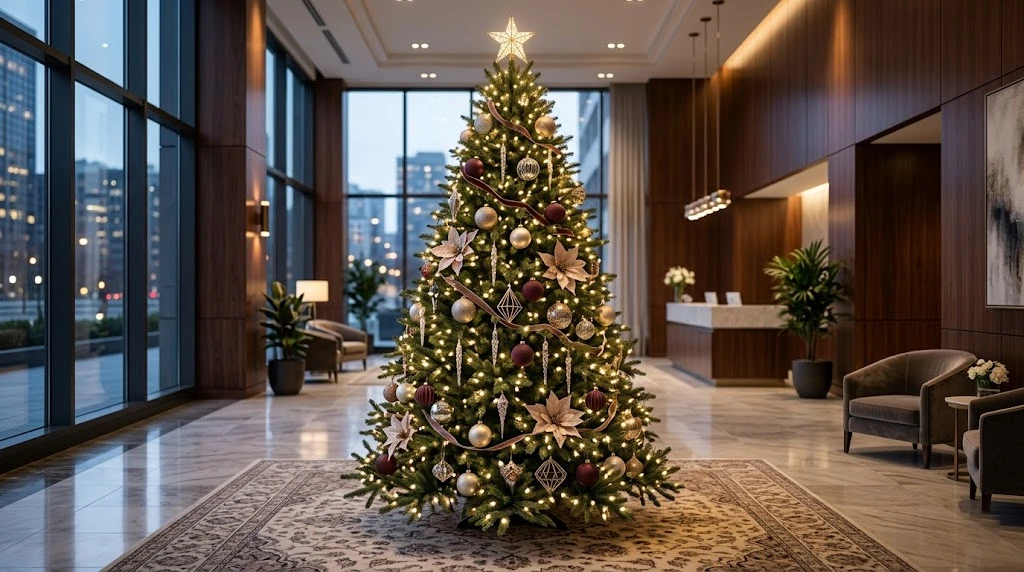
The golden rule of thumb for both commercial and residential spaces is to leave at least 12 to 18 inches (30 to 45 cm) of clearance between the top of the tree and the ceiling. This ensures ample space for a tree topper without bending the highest branch.
- Tabletop to 5 Feet: Ideal for visual merchandising, window displays, or compact hotel rooms.
- 6 to 7.5 Feet: The most popular standard sizes for residential homes and standard office spaces.
- 9 to 12+ Feet: The go-to choice for commercial lobbies, shopping malls, and large vaulted ceilings.
Choosing the Profile (Shape)
The footprint of the tree is just as important as its height.
- Full Profile: The classic, voluminous look. Best for large, open spaces where the tree is the central focal point.
- Slim / Pencil Profile: Perfect for tight corners, narrow hallways, or flanking an entrance. These take up less floor space while still providing a dramatic vertical impact.
2. PE vs. PVC Artificial Christmas Trees: Which Material is Better?
The realism and durability of a faux tree depend entirely on its foliage. Understanding the difference between PE and PVC is crucial for making a cost-effective purchasing decision.
PVC (Polyvinyl Chloride): The Traditional Choice
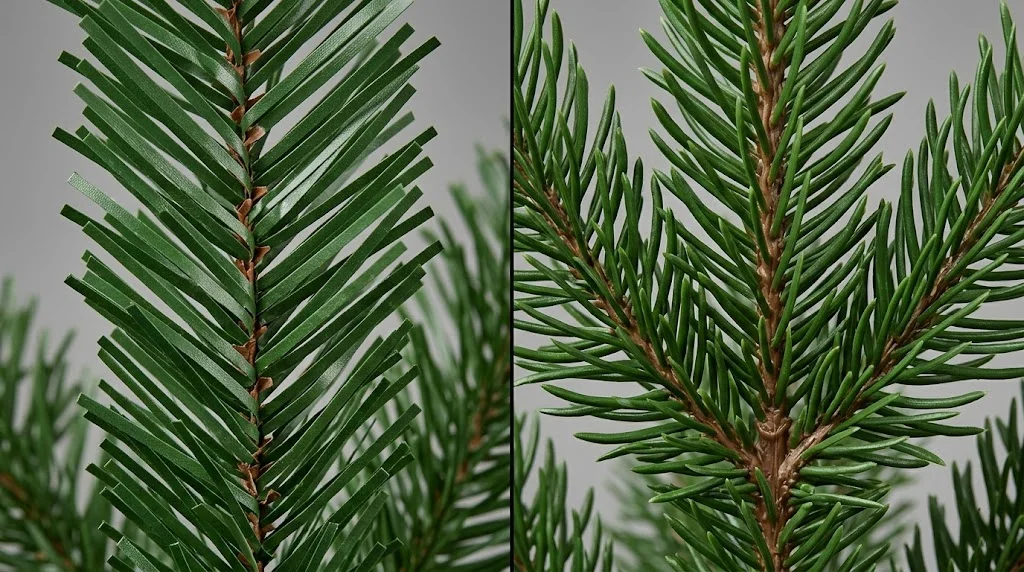
PVC needles are created by cutting flat sheets of colored plastic into thin strips and twisting them onto wire branches. They are excellent for creating a dense, bushy appearance. While highly cost-effective, pure PVC trees lack the 3D realism of natural pine needles.
PE (Polyethylene): The “Real-Touch” Revolution
High-end commercial trees utilize PE technology. These branches are 3D-injection molded using real tree branches as templates. The result is a needle that possesses the thickness, texture, and color variations of a living evergreen.
The Manufacturer’s Secret: For the best balance of visual impact and budget, we highly recommend PE/PVC mixed trees. We place the ultra-realistic PE branches on the outer tips where they are most visible, and use PVC closer to the trunk to create a lush, full core that hides the center pole.
3. Should You Buy a Pre-lit Artificial Christmas Tree or Unlit?
For commercial setups, time is money. Stringing thousands of lights onto a massive tree is a labor-intensive nightmare. This is why Pre-lit Artificial Christmas Trees dominate the B2B market.
Why Pre-lit is the Standard
Pre-lit trees come with wires professionally hidden and integrated directly into the branches. This guarantees an even distribution of light without the messy, tangled cords. When setting up large displays, this plug-and-play design saves countless hours of expensive labor.
Choosing the Right LED Technology
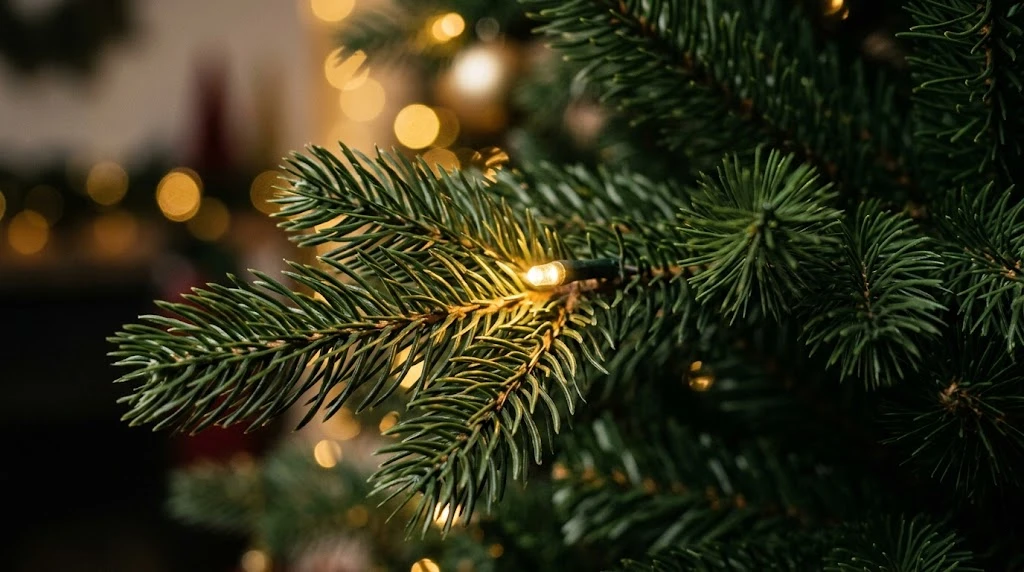
Always opt for energy-efficient LED lights. They consume 80% less energy than traditional incandescent bulbs and emit almost no heat, making them significantly safer for indoor environments.
- Warm White: The timeless, elegant choice favored by luxury hotels and classic retail setups.
- Multi-Color / RGB: Perfect for vibrant, family-oriented spaces or themed commercial events.
4. Are Your Trees Safe? (Fire-Retardant Standards & Quality Control)
When supplying markets in Germany, the UK, Italy, and the Americas, strict adherence to safety standards is non-negotiable. Always ensure your trees are manufactured with fire-retardant materials and that the lighting systems hold the necessary local certifications (such as CE, RoHS, or UL).
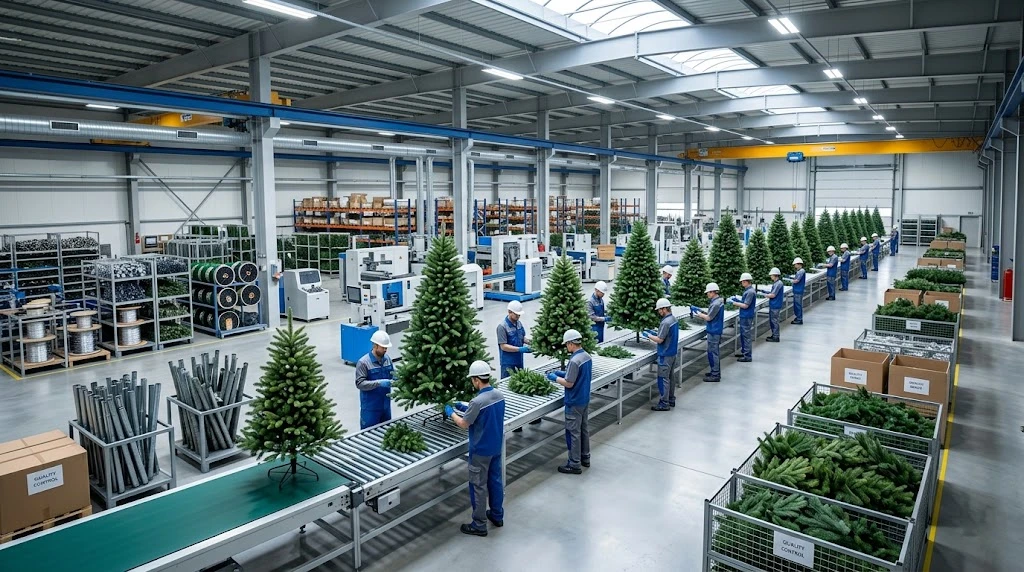
Furthermore, choosing the right manufacturing partner secures your supply chain. With a robust production capacity of 15,000 artificial trees per month, our factory guarantees on-time delivery even during peak sourcing seasons. We also provide comprehensive OEM and ODM services, allowing wholesalers to customize logos, tags, and packaging to build their own brand identity.
Conclusion: Ready to Source Your Trees?
Investing in the right artificial Christmas trees—focusing on the appropriate size, a realistic PE/PVC material blend, and efficient pre-lit LED technology—ensures a stunning, hassle-free holiday display that lasts for years.
Are you looking for a reliable, direct-source factory to elevate your holiday inventory this year? Contact our expert team today to discuss your wholesale needs, request a custom quote, or explore our OEM customization options.

About the Manufacturer
TwinkleTree is a professional manufacturer of premium artificial Christmas trees, dedicated exclusively to the global B2B market. With over 15 years of expertise in hyper-realistic PE foliage technology and commercial-grade lighting systems, we provide factory-direct ODM/OEM solutions for major retailers, hotels, and commercial projects worldwide.
Contact Factory TeamLooking for Commercial Christmas Trees?
Get factory-direct pricing on bulk orders. We support OEM/ODM with a 24-hour response time.
Request a Quote